

Elena adopted a dog last month, and since then her receipts tell a story: food at a pet specialty store, a leash from an e-comm site, treats from a club store, and a pet-friendly hotel for a long weekend.
No single store sees all of that, which is why the strongest audiences start with the whole cart. Purchase-based audiences are built from what shoppers bought, wherever they bought it, so you can reach someone like Elena right when her routine changes. The obvious audience isn’t always the one that pays off. Use the five steps below to find the one that does for your next campaign.
1. Name the goal
Start with what you want your purchase-based audiences to do. Purchase-based targeting can support four goals. Reach finds category buyers you haven’t spoken to yet. Retain keeps your current buyers buying. Acquire brings in people who are new to the category or the brand. Conquest wins shoppers who are loyal to a competitor. Each goal points to a different shopper, so settle on one before you build anything.
2. Define the buyer and the occasion
Next, get specific about who you’re after and what’s happening in their life. A label like “pet owner” is broad. An occasion is sharper, like a new pet, a college move-in or a long weekend away. Adding that detail makes purchase-based targeting far more specific, and it can uncover buyers you wouldn’t think to look for.
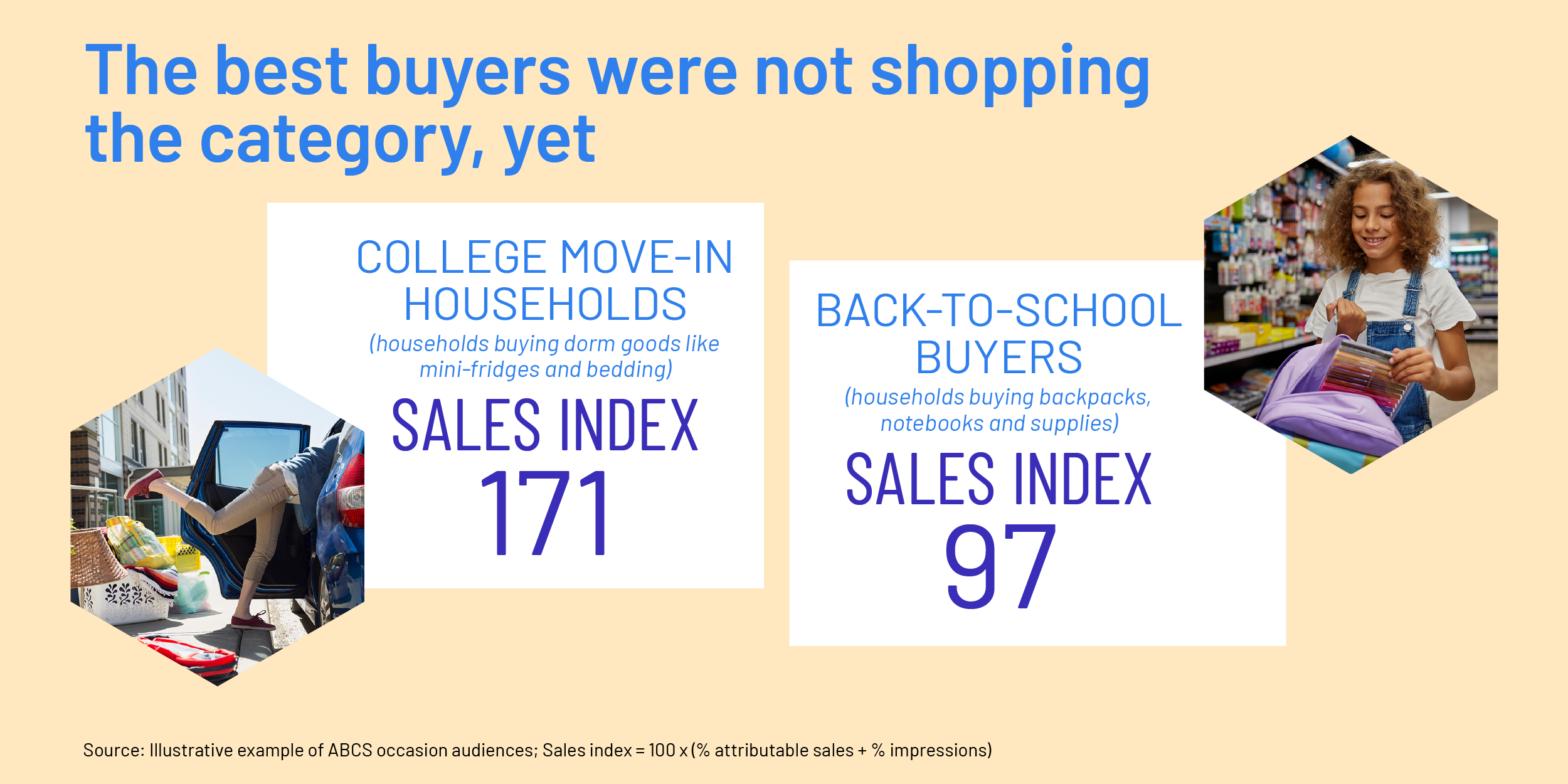
A laptop brand built six back-to-school audiences from what households were already buying. The obvious choice, back-to-school supply buyers, landed just under what their share of impressions would predict (97). Then picture Dana, who is helping her kid move into a college dorm. She’s bought bedding online and a mini-fridge at a big-box store, and she hasn’t been near the electronics aisle yet. Households like Dana’s came in far above what their share of impressions predicted (171), the best of all six.
3. Check feasibility and size
Decide whether a syndicated audience fits your buyer or a custom one needs to be built, then confirm it’s big enough for your campaign. A feasibility read shows how many households match the buyer you described. If the number is too small, widen the occasion or the category before anything is built.
4. Match the message to the buyer
Give your creative team the buyer and what’s in their cart. The message needs to fit the person seeing it. A laptop ad for Dana can speak to the dorm room she’s setting up, and a pet brand’s ad for Elena can speak to her new dog. Audience targeting may see a boost when the creative reflects what the audience bought.
5. Measure how each audience performed
Measure awareness, consideration, and sales lift together, broken out by audience, to see how each one performed across the full customer journey. Sales reads are available while a campaign is still live, and this means that your budget can shift toward the purchase-based audiences that are paying off.
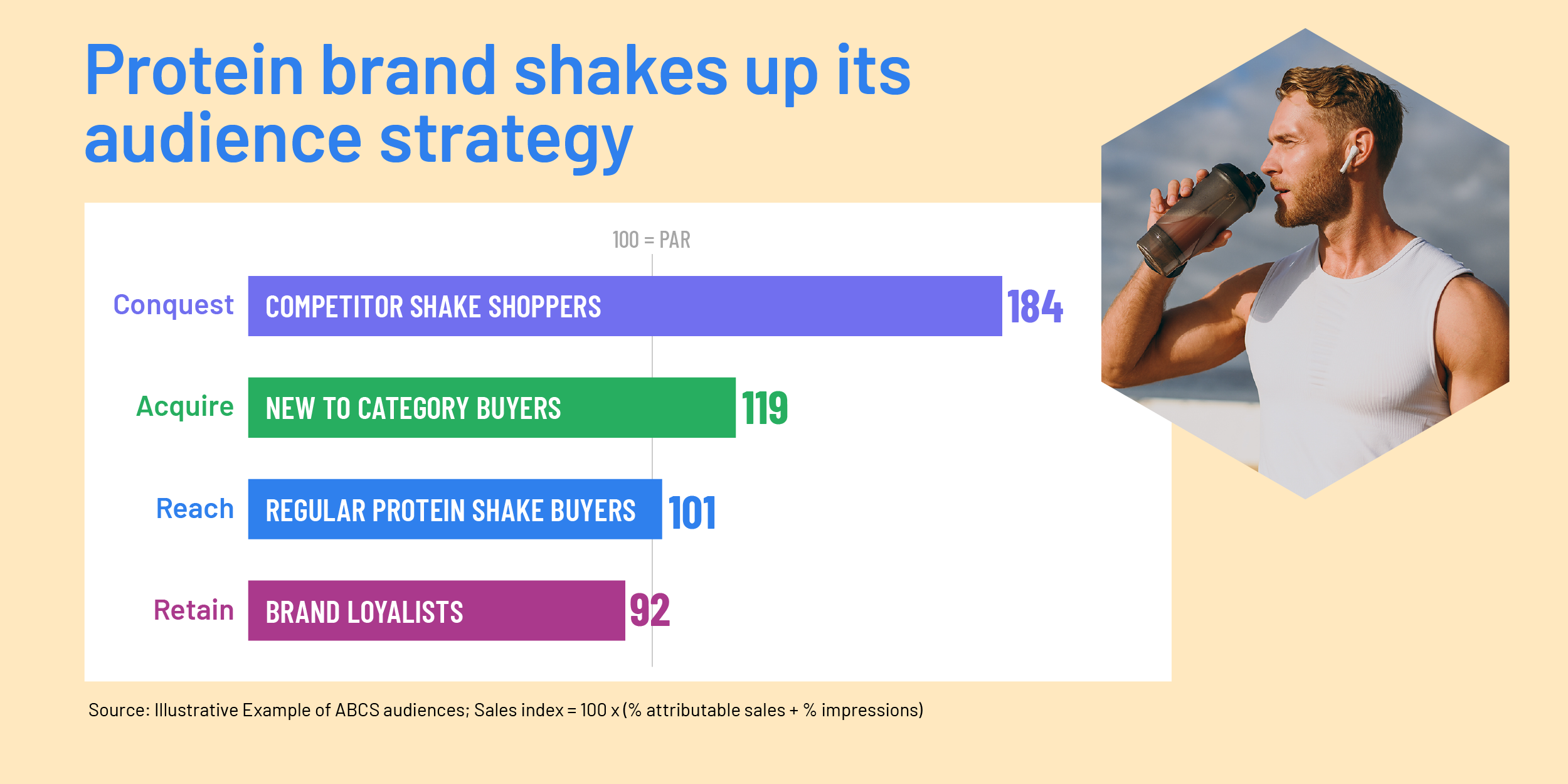
A ready-to-drink protein brand built one audience for each goal:
- Reach regular protein shake buyers
- Retain the brand’s own weekly buyers
- Acquire buyers new to the protein shake category
- Conquest buyers loyal to a competing brand
The audience many teams would reach for first, the brand’s own weekly buyers, indexed at 92, just under what its share of impressions would predict. The conquest audience indexed at 184, nearly twice the sales its share of impressions would predict. New-to-protein shoppers came in at 119 and regular shake buyers at 101. The biggest win came from shoppers who started furthest away — the kind of finding you can act on when you read results by audience.
Frequently asked questions
What are purchase-based audiences?
Purchase-based audiences are groups of households chosen because of what they bought: which products, at which stores, and how often. Because they start with real purchase behavior, you can build audiences around goals and occasions instead of broad labels.
Which goals can purchase-based targeting support?
Reach, retain, acquire, and conquest goals, plus audiences built around an occasion, a lifestyle, or a specific retailer.
What’s the difference between syndicated and custom audiences?
Syndicated audiences are built in advance and ready to activate. Custom audiences are built around your campaign by a team aligned with your KPIs.
What should I look for in a purchase-based audience provider?
Look for four things, no matter the provider you choose:
- Data source: Real transactions, such as receipts, card data, or frequent shopper data, alone or some combination. Frequent shopper data is detailed inside one retailer, but it only sees members who scan a card there, so purchases at other stores, online, and without a card stay out of view. Ask how many retailers and categories the data spans so you can understand the gaps.
- Recency: A refresh schedule the provider can name, enabling the audience to keep up with what households buy today.
- Privacy: Opted-in, privacy-safe data that complies with the privacy laws where you run.
- Results: Independent measurement broken down by audience, giving you clear insights into what worked.
Where can I use these audiences?
ABCS audiences run across CTV, social, video, audio, display, and retail media. Custom audiences are delivered directly or through the partners you already use, and syndicated audiences are available where you activate.
What purchase data stands behind ABCS audiences?
ABCS audiences are built from receipt and credit card panels that cover about 40 million households and more than 15,000 retailers, down to the item. That includes mass, club, grocery, convenience, drug, specialty, and e-comm, across categories like pet, beauty, alcohol, home improvement, travel, and quick service restaurants.
How does ABCS build an audience?
ABCS audiences start with a seed, a group of households with verified purchases such as pet food at a pet specialty store. A model learns from that seed to find more households like it, so the audience reaches scale while staying grounded in real purchase behavior.
Is the data privacy-safe?
ABCS audiences are built from opted-in, privacy-safe data and are compliant with GDPR and CCPA.
How long does it take to get started?
A 24-hour feasibility read confirms the purchase behavior you need is there. Audience sizes follow in days, and final segments arrive days after you sign off.
How will I know an audience worked?
Look at sales lift, awareness, and consideration for each audience. ABCS reports them together and shows sales results while the campaign is still running, so budget can move toward what’s working.
Elena’s next purchase is already on its way. Tell us the buyer you’re after, and we’ll build the audience.